



What's Actually in Your Soap? A Label-Reading Field Guide

What is actually in a bar of soap?
Real soap is three things: oils, lye, and time. The reaction is called saponification, and what it leaves behind is soap plus natural glycerin. Everything else on a label is either helping the bar or hiding something from you.
You will spot the difference in ten seconds flat. No chemistry degree required. Bring any wrapper in your house.

The all-time best sellers · cold-process, all-natural · 18 YEARS / EST. 2008
|
3
Ingredients to make it
|
1
Reaction: saponification
|
18
18 YEARS / EST. 2008
|
The Lion's Den · Soap School
Oils, lye, and time
Every real bar in history comes from one reaction. Oils and butters meet lye, the mix warms and sets, and weeks later you hold something new: soap, with glycerin born right in the pot.
The oils are the kind you can picture. Coconut. Olive. Shea butter. Castor. Each one brings something to the bar: hardness, lather, a creamy rinse. A soap maker balances them the way a cook balances a recipe, and the recipe is the product.
Cold process means nobody rushes it. No boiling off, no factory line shaving days. The bar cures until it is ready.
And the lye? It goes into the pot and never comes out. The reaction consumes it. A properly made, fully cured bar has none left.
The cure: weeks of doing nothing, on purpose
After the pour, a cold-process bar rests. Four to six weeks on a rack, air moving around it, water leaving it. The bar hardens. The lather gets denser. The scent settles into itself.
A factory cannot afford that shelf. Time is the one ingredient you cannot synthesize, so mass production engineers it out. That is the quiet difference you feel when a handmade bar lasts and a pressed bar turns to mush in the dish.
Patience shows up in the ledger too. It costs more to make a bar this way. It also shows in the shower, which is the only vote that counts. Learn how to make a cured bar last even longer.

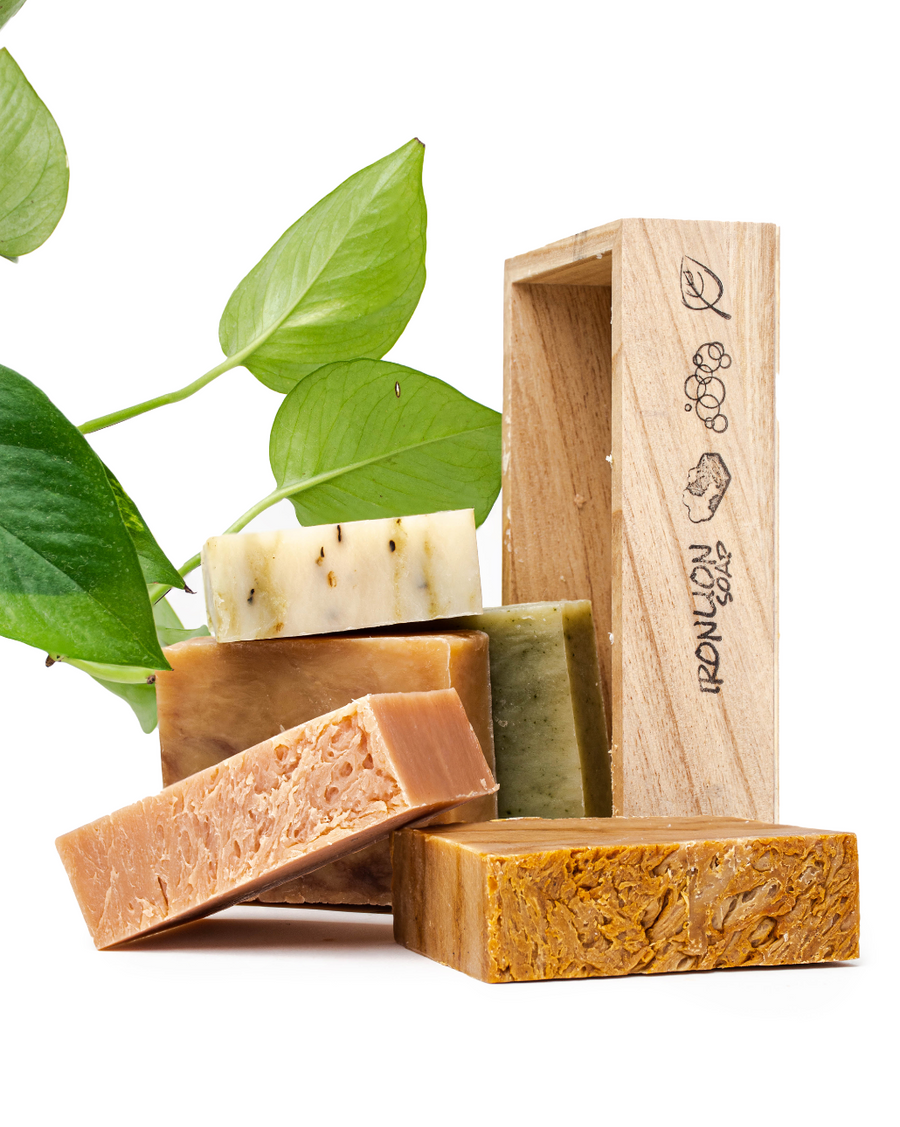
MNTN Stone · what a three-ingredient philosophy looks like cured
Glycerin: the ingredient they take out
Glycerin is a humectant: it draws moisture toward skin. Soap produces it naturally; the pot throws it in for free. It is why “glycerin soap” gets sold as a product of its own.
Here is the industry's quiet math: glycerin sells on its own. So mass production strips it out and sells it on. The bar you buy kept the lather and lost the good part.
A cold-process bar keeps every drop where it was made. That is the whole argument for doing it slow. Check any Iron Lion Soap wrapper and glycerin is right there, because it never left.
Where scent comes from
A bar can smell like something for two reasons. The plant was in the pot, or a lab matched the plant's cologne.
Essential oils and botanicals scent the bar the first way. Lemon smells like lemon because lemon is on the ingredient list, by name. The scent blooms in the shower, does its job, and fades the way real things fade.
The second way is the one-word “fragrance”: engineered to be loud, engineered to linger, contents undisclosed. Some people want that. We figure if a scent is going to ride on your skin all day, you deserve to know its first name.
Every scent in the Den comes the first way. Read any wrapper on every bar in the lineup and the scent source is named, spelled, and standing in line with the rest of the recipe.
The Villain
Big Soap has three favorite tricks. One word, “fragrance”, that can legally stand for a proprietary blend nobody has to disclose. A wrapper that says beauty bar, body bar, anything except soap. And a parade of syllables arranged to make you stop reading.
None of it is an accident. A confused customer grabs the brightest box. An informed one reads for ten seconds and puts it back.
We wrote a whole piece on what the drugstore bar gets wrong. This one hands you the decoder.
The label decoder
Clip this. Eight soap ingredients and impostors you will meet on a wrapper, what they are, and where we stand.
| What the label says | What it is | The take |
| Saponified oils, sodium olivate, sodium cocoate | Real soap, made from actual oils | The whole point |
| Sodium tallowate | Saponified tallow; soap the old way | Real soap. We work plant-side |
| Glycerin | The humectant born in the soap pot | Soap made it; the bar should keep it |
| Tocopherol | Vitamin E, a natural antioxidant that keeps oils fresh | Welcome on our label |
| Sodium lauryl / laureth sulfate | Synthetic detergent surfactants | Big lather, stripped feel. We skip them |
| Cocamidopropyl betaine | Synthetic foam booster | Lab lather. We skip it |
| Parabens (methyl-, propyl-) | Synthetic preservatives | We skip them |
| “Fragrance” or “parfum” | One word that can hold dozens of undisclosed compounds | A sealed box. We don't buy sealed boxes |
Read the order. It's ranked.
One more decoder rule, and it might be the most useful: ingredient lists rank by weight. The heaviest ingredients come first. By the time you reach the bottom of the list you are reading trace amounts.
So the first five entries are the product. On a real soap wrapper the first five read like a pantry shelf: saponified olive oil, coconut oil, shea butter, castor oil, water. On a detergent bar the first five are surfactants with syllable counts, and the plant oils the front of the box bragged about sit at the bottom, waving from the trace section.
Position tells you about “fragrance” too. Near the end of a short honest list, it is a light hand. Sitting mid-list on a long one, you are buying a lot of a thing nobody will name. The top of the list cannot spin.
Wrapper words that carry no weight
The front of a wrapper is where the marketing lives. The ingredient list on the back follows federal labeling rules: every ingredient named, ranked by amount. That difference explains most of the aisle.
“Natural” has no enforced legal definition on a US soap wrapper, so the word by itself proves nothing about the formula. The ingredient list is where it gets tested. “Dermatologist-tested” reports that a test happened somewhere, sometime. It does not tell you the result. “pH-balanced” describes a number, and says nothing about what made the lather.
Every one of those words can be true and still tell you nothing. They are decoration. The reader they work on is the one who never flips the box over. You flip the box over now.
Our answer to the decoration problem has been the same for 18 years: print the pantry. Every Iron Lion Soap wrapper names its oils, butters, and botanicals outright, because a company that makes soap from three kinds of ingredient has nothing to abbreviate. When the back of the box is the sales pitch, the front can just be a lion.
The people's shortlist · $40
Four bars whose labels you can read out loud. Start where everyone starts.
Shop best sellers · $40Three ingredients, three bars
Transparency is easy to preach and easy to check. Here is what naming your ingredients looks like when the ingredient is the bar.

MOJO · rolled oats over a vanilla base
MOJO is the plainest recipe in the lineup and the #1 best seller since 2014. Rolled oats you can see, light grit that buffs without scratching, vanilla that pulls warm over a clean base. Born 2011. The bar that built the brand.

4Thieves Blend · five oils, two clays, charcoal
4Thieves Blend keeps the classic scent blend at full strength: lemon, clove, cinnamon, eucalyptus, rosemary. Under it sits kaolin clay, rhassoul clay, and charcoal. Every one of those words is on the label, spelled out.
And T2 carries tea tree from a single Australian farm, full strength, named on the wrapper. One source, one oil, no blend math. When a company will tell you the farm, you can stop wondering what “fragrance” means.
Real soap vs the detergent bar
| Real soap | The detergent bar | |
| Born from | Oils, lye, and time | Synthesized surfactants |
| Glycerin | Stays in the bar | Routinely stripped out |
| The list reads like | A pantry | A lab |
| The wrapper says | Soap | Beauty bar, body bar |
| After the rinse | Calm and done | Tight and squeaky |
Works on any wrapper in the aisle
The 10-second label test
- Find the word soap. If the wrapper dodges it, ask why.
- Count the ingredients you can picture. Oils and butters count. Tongue-twisters don't.
- Look for “fragrance” standing alone. One word, contents undisclosed.
- Find glycerin. In real soap it is there because the pot made it.
- Scan for the word sulfate. That is the detergent tell.
Ten seconds. If the label fails, put it back.
From the Den · Verified Yotpo review · The Arsenal
“So I’m usually not a bar soap fan due to the residue that you always seem to feel after using it…not these!! Absolutely love this soap. Doesn’t leave sticky residue after rinsing, smells fantastic, ingredients I can trust, even my fiancé who is immensely stubborn about his soap is using & loving! Highly recommend to anyone looking to step up their soap game.”
Rachel B. · 5 stars
Where to start
You now read labels better than most of the aisle. Put it to work on ours. Every Iron Lion Soap bar is cold-process and all-natural, built the same way since 2008: no sulfates, no parabens, no mystery fragrance. And run the math while you are at it: six Arsenal bars come to $50, about $8.33 each, because the sixth rides free.

$50.00 · Buy 5 bars, get the 6th free
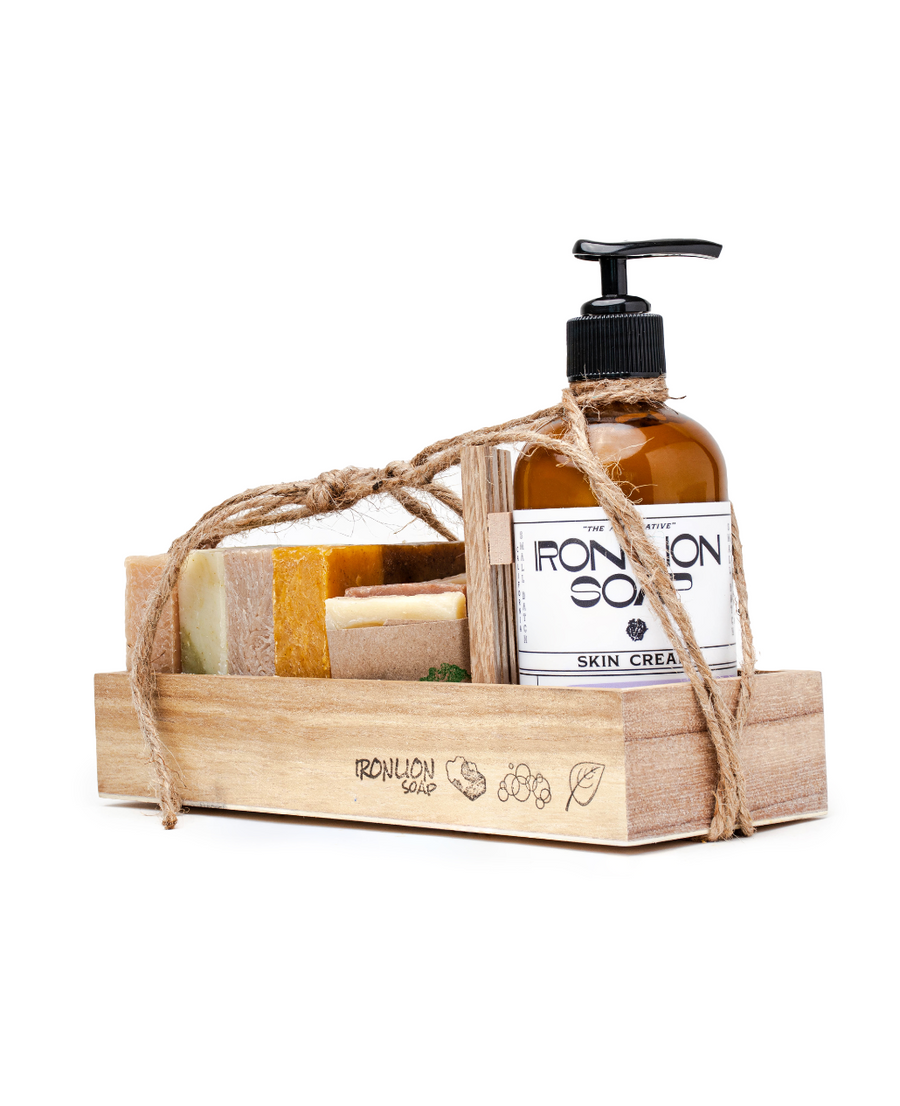
The Arsenal 3.0
Six bars, your pick of the lineup. You pay for five. The fastest way to find the bars your skin votes for.
Load the ArsenalWant the pantry to restock itself? The SoapScription lands fresh bars monthly from $30.
The transparency shelf
 MOJO
$9.99
MOJO
$9.99
|
 4Thieves
$9.99
4Thieves
$9.99
|
 Best Sellers
$40.00
Best Sellers
$40.00
|
 Arsenal 3.0
$50.00
Arsenal 3.0
$50.00
|
Questions people ask at the shelf
What is saponification?
The reaction that turns oils and lye into soap. Oils plus lye, warmth and time, out comes soap and natural glycerin. Every real bar in history was made this way.
Does soap contain lye?
Lye goes into the pot and never comes out. Saponification consumes it; a properly made and fully cured bar has none left. What remains is soap and glycerin.
Why is glycerin removed from commercial bars?
Glycerin is valuable on its own, so large manufacturers strip it out and sell it on. Cold-process soap keeps it in the bar.
What does fragrance mean on a label?
Legally, one word that can stand for a proprietary blend of many compounds, none of which must be listed. You are trusting a sealed box. We list what goes in our bars.
Is a beauty bar the same thing as soap?
Usually no. Many mass-market bars are mostly synthetic detergent, and the wrapper says beauty bar or body bar because soap means something specific. Read the label; it will tell you which one you are holding.
Is cold-process soap fine for sensitive skin?
A short, readable ingredient list makes the answer easier to find. Start with the plainest recipe, like an oat and vanilla bar, and patch test first: inside of the forearm, 24 hours. Your skin gets the final vote.
Why does handmade soap cost more than a drugstore bar?
Real oils, small batches, and weeks of cure time cost more than pressed detergent. The bundle math closes most of the gap: six Arsenal bars run $50, about $8.33 each, and the bar itself lasts when you keep it dry.
18 YEARS / EST. 2008 · The Alternative
Ours reads like a pantry: oils, butters, botanicals, and time. It has read that way since 2008.
Load the Arsenal · $50


Leave a comment