



What "Fragrance" Hides on a Soap Label

What does "fragrance" or "parfum" mean on a soap label?
On a label, fragrance or parfum is one legal term that stands in for a whole scent blend a maker never has to name. It can hide many undisclosed ingredients.

The Arsenal · Six scents from real oils · Every ingredient on the label · 18 YEARS / EST. 2008
Build your rotation · $50.00
Pick five bars, get the sixth free. Every scent comes from named oils you can read on the wrapper.
Load the Arsenal · $50The short version
- Fragrance and parfum are legal catch-all terms. One word can stand in for a scent blend of many undisclosed ingredients.
- The blend is often there to cover the smell of a harsh detergent base, and it can run drying or irritation-prone on sensitive skin.
- Real essential-oil scent names its source. Orange, mango, guava, watermelon, lemon, each one printed on the label.
- Iron Lion Soap has run cold-process, all-natural bars since 2008, with no synthetic fragrance and a list you can pronounce.
The Lion's Den · Ingredient Series
One word, a whole blend
Turn a drugstore bar over and find the word fragrance, or parfum, sitting near the end of the list. It looks like a single ingredient. It works like a trapdoor. A scent blend can carry a long roster of separate materials, and the maker gets to fold all of them under that one word. You buy the bar with no way to read what is actually in the smell.
Scent recipes get protected as trade secrets, a rule built for perfume houses so rivals cannot copy a formula. That protection rode along onto everyday products, which is why a $2 body wash can print one word and keep the rest of the blend off the label. A cheap wash base smells like what it is, a stripped chemical cleaner, the kind we broke down in real soap versus body wash. Fragrance is the paint that covers the smell of the strip job. The louder the perfume, the more it usually has to hide.
None of that tells you how the scent lands on skin. A synthetic blend can sit heavy and stay for hours, and on sensitive skin it can read drying or itchy. If a bar leaves your skin reacting, stop using it and see a doctor. A soap label cannot answer that for you.
The Villain
Big Soap loves the word fragrance. It lets a factory pour one mystery blend across a whole shelf of bars and call it a day. No source, no list, no way for you to check.
The trick underneath it is simple. Wash you with a sulfate base that strips your skin tight, then hang a heavy perfume over the top so the bar smells like a candle. The cleaner underneath still strips. You are paying for the cover story.
The tell is right on the wrapper. Real scent gets named: orange oil, lemon, guava. When the label just says fragrance, the recipe is the part they kept from you.
What real scent looks like on a label
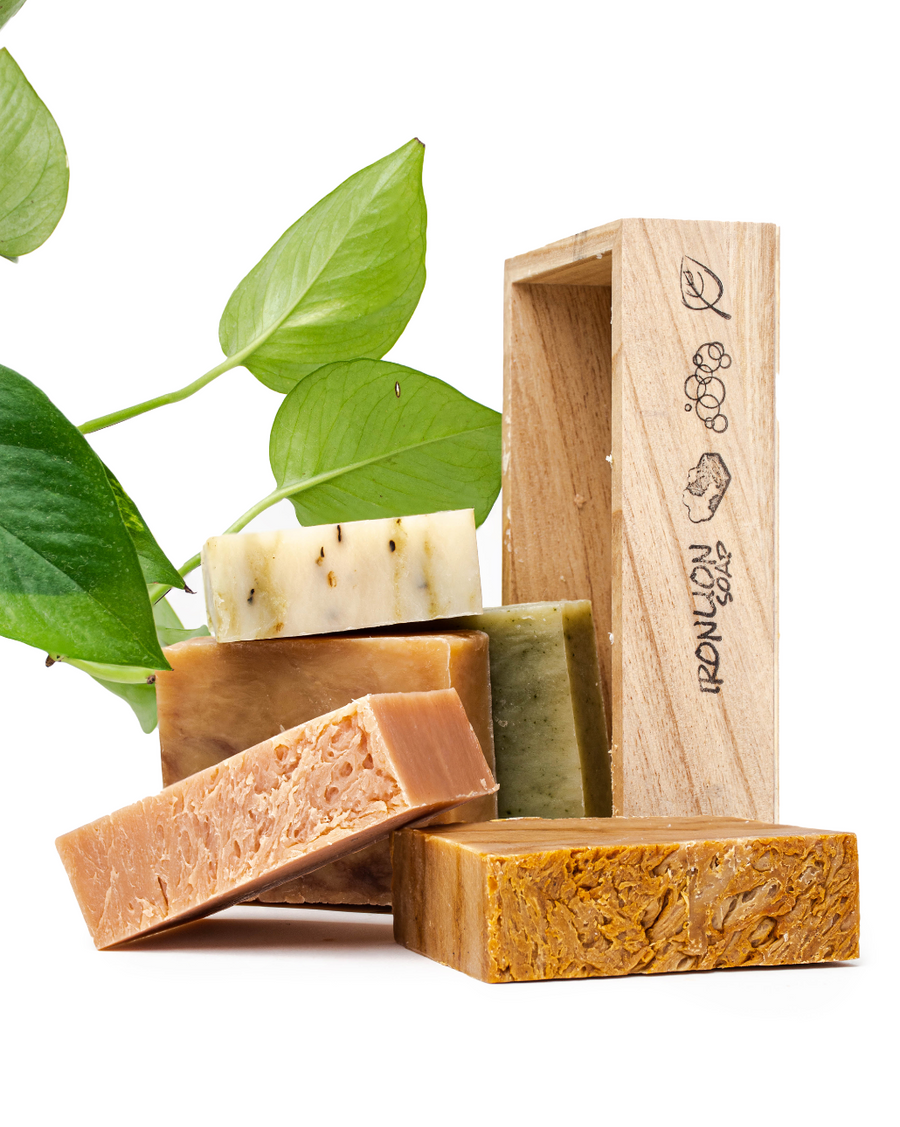
Every Iron Lion Soap bar builds its scent from named plant oils, and every one of them is printed on the wrapper. There is no line that reads fragrance, because there is nothing to fold away. If you want the long version of how we read a label, the what is actually in your soap guide walks the whole list.
Orange Hibiscus is navel orange and hibiscus, and it smells like peeling fresh fruit over the sink. Mango Guava leans tropical, mango seed oil over guava on a plain plant-oil base. Watermelon Lemonade is the summer one, watermelon and lemon, built for the rinse after a day in the sun. Every note traces back to a plant you can name.
Real oils behave differently in the shower, and it is worth knowing before you switch. A natural scent lifts on the first lather and settles cleaner as you rinse, so it fades faster than a synthetic that is engineered to cling. That fade is the trade for knowing what is in the smell. We think it is a fair one. The base underneath is the same cold-process, all-natural formula Iron Lion Soap has poured since it started in a gym bag in 2008.

Mango Guava · Named oils, no hidden blend · Cold-process since 2008
Orange Hibiscus · Single Bar · $9.99
Navel orange and hibiscus on a cold-process base. A bright citrus wash with the source right there on the label.
Get Orange Hibiscus · $9.99From the Den · Verified Yotpo review · Orange Hibiscus
“I love the smell of fresh orange peel. This has that essence of peeling an orange and that burst of juice just takes you away. Can’t get enough of it.”
George · 5 stars
Build a scent rotation
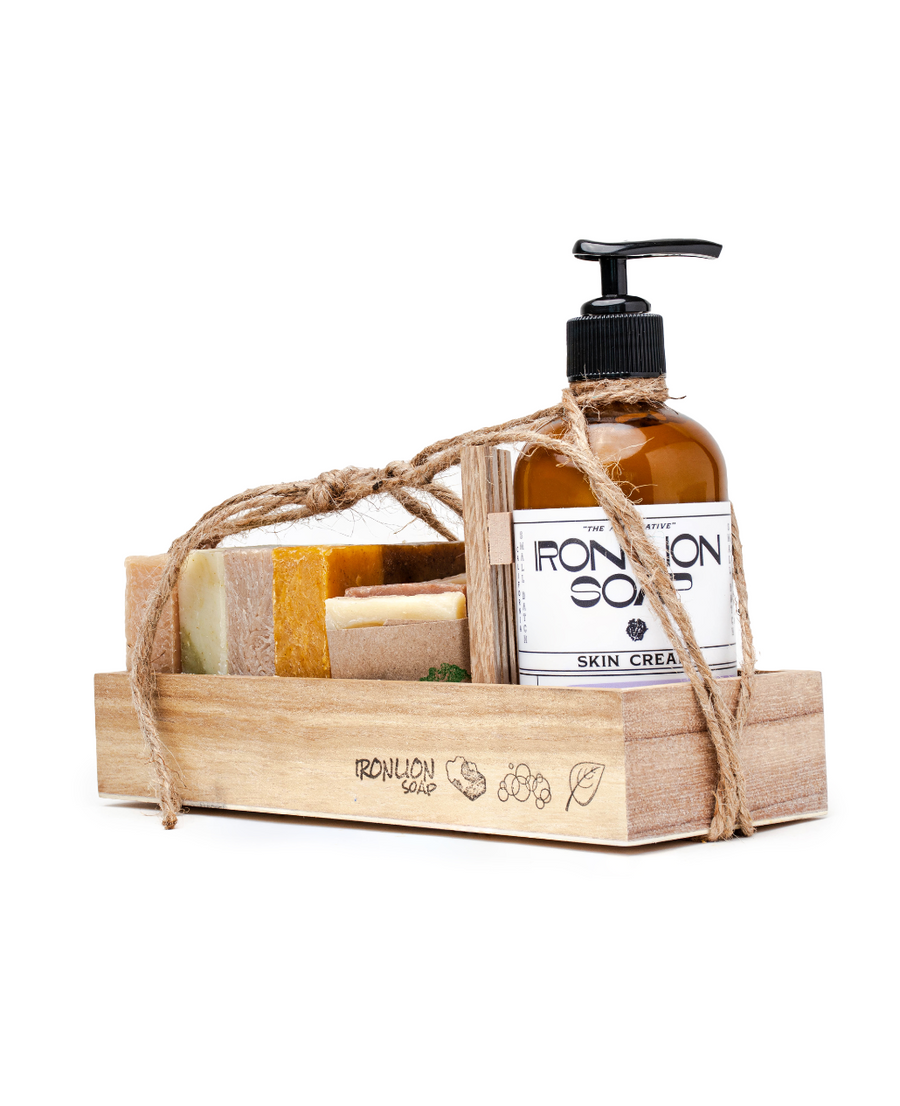
A single bar is $9.99. The smart way to try named scents is The Arsenal: pick five bars and the sixth comes free, six bars for $50, about $8.33 each. Load it with Orange Hibiscus, Mango Guava, and Watermelon Lemonade, then round it out with whatever fits your week.
One order past $65 ships free, so a full Arsenal clears the line on its own. Keep one bar in the shower, one in the gym bag, and spares in the drawer for the training camp that eats a bar a month.

$50.00 · Buy 5 bars, get the 6th free
The Arsenal 3.0
Six bars, your pick, every scent from a named oil. The fastest way to find the ones you reach for.
Load the ArsenalFound your scents? The SoapScription restocks the den monthly from $30 so the shower never runs dry.
Scents worth reading the label for
 Orange Hibiscus
$9.99
Orange Hibiscus
$9.99
|
 Mango Guava
$9.99
Mango Guava
$9.99
|
 Watermelon Lemonade
$9.99
Watermelon Lemonade
$9.99
|
 Arsenal 3.0
$50.00
Arsenal 3.0
$50.00
|
Questions people ask
What does "fragrance" or "parfum" mean on an ingredient list?
It is a legal catch-all. One word can stand in for a scent blend made of many separate ingredients, and the maker does not have to list them. The term exists to protect perfume recipes, so a label can say fragrance and tell you nothing about what is in the smell.
Why is fragrance allowed to be a secret ingredient?
Scent recipes are protected as trade secrets, a rule built for perfume houses so rivals cannot copy a formula. That protection carried over onto everyday products, so a body wash can print the single word fragrance and keep the rest of the blend off the label.
Is synthetic fragrance bad for your skin?
Because the blend is undisclosed, you cannot see what is in it. Some blends run drying or irritation-prone on sensitive skin. If a product leaves your skin reacting, stop using it and ask a doctor. No soap should claim to settle that for you.
What is the difference between fragrance and essential oils?
Essential oils are named plant extracts, so the label reads orange oil or guava rather than one blanket word. Fragrance can be a lab-built blend hidden under a single term. Named oils show the source right on the label. Fragrance holds the recipe back.
Is "fragrance-free" the same as "unscented"?
No, and the gap trips up a lot of people. Fragrance-free means no scent was added. Unscented often means a masking scent was added to cover the base, so an unscented product can still carry a fragrance blend. Read the ingredient list to tell them apart.
Does Iron Lion Soap use synthetic fragrance?
No. Every bar builds its scent from named plant oils, and each one is printed on the wrapper. There is no fragrance line to hide behind. Iron Lion Soap has made cold-process, all-natural bars this way since 2008.
Why does natural soap scent fade faster?
Real oils lift on the first lather and settle as you rinse, where a synthetic blend is engineered to cling for hours. The softer fade is the trade for a scent you can read on the label. Most people find it a fair trade once they switch.
Can I use scented soap if my skin is sensitive?
Patch test first. Rub a little lather on the inside of the forearm and wait 24 hours before a full wash. Named essential-oil scents let you see the source, which helps if you already know a note that bothers you. If your skin reacts, check with a doctor.
18 YEARS / EST. 2008 · Born on the mats
Eighteen years of pouring bars you can read start to finish. Load the Arsenal and find your six.
Load the Arsenal · $50


Leave a comment